
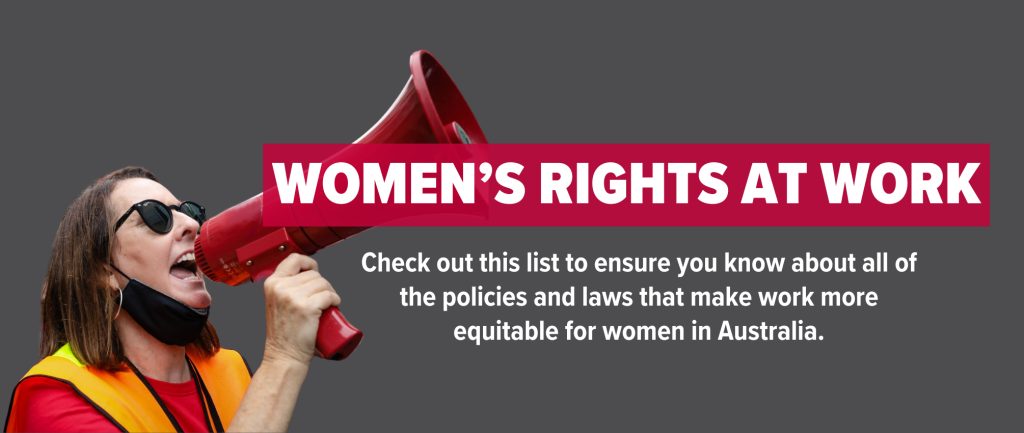
Are you already aware of all of the policies and laws designed to ensure workplaces are more equitable? Check out this list to make sure you’re taking advantage of all of the rights that union members have fought for. And, perhaps to get some inspiration on what to include in your next log of claims.
Super on parental leave
Starting this year workers will earn superannuation on government-funded Parental Leave Pay. Under the new law eligible parents with babies born or adopted on or after 1 July 2025 will receive an additional contribution, based on the Superannuation Guarantee (12% of their Parental Leave Pay) to their nominated superannuation fund. The lump sum superannuation contribution, including an interest component, will be paid following the end of each financial year in which government funded Parental Leave Pay was paid. The ATO will make the first payments from July 2026.
Paid family and domestic violence leave
All employees can now access 10 days of paid family and domestic violence leave each year. This includes full-time, part-time and casual workers. Workers can access the full 10 days of paid leave from the date that they start their employment.
To be eligible, workers must be experiencing family or domestic violence, and the leave must be taken for doing something to deal with the impact of the family or domestic violence that it wouldn’t be practical to do outside of work hours (e.g. arranging safe accommodation, accessing police, attending court, counselling, medical, financial or legal appointments).
The entitlement to paid family and domestic violence leave comes from the National Employment Standards (NES). It’s a paid minimum leave entitlement, like annual leave or paid sick and carer’s leave.
Reproductive leave
Reproductive leave gives workers the right to paid time off specifically to manage or treat conditions, or undertake procedures, that relate to their reproductive health and wellbeing.
Those could include dealing with period pain, endometriosis, IVF and other fertility-related procedures, miscarriages and terminations, vasectomies and hysterectomies, pregnancy, breastfeeding and lactation, or contraception.
It’s still a fairly new idea and it’s only available to workers in a handful of companies who won the right through collective bargaining.
We asked members whether it’s something you think you should be available to workers in our International Women’s Day survey, look out for the report to find out if there’s a consensus.
Individual Flexibility Arrangements (IFAs)
An Individual Flexibility Arrangement (IFA) is a written agreement used by an employer and employee to change the effect of certain clauses in their award or agreement.
Individual Flexibility Arrangements can be a useful tool for workers, especially if you have caring responsibilities. For example, if the standard shift times at your workplace are 8am – 4pm, but you need to pick up kids from school at 3:30pm, you could use an IFA to change your shift time to 7am – 3pm.
Both you and your employer must agree to make an IFA. It is unlawful for an employer to pressure you to make an IFA. If your employer proposes changing anything other than standard shift times, you should seek advice from the Union. The Union is aware that some Early Childhood Education and Care employers have tried to make workers sign IFAs to access worker retention pay increases.
Path to permanent employment for casual workers
There are now stronger protections and new rights for workers employed in casual and insecure work, which disproportionately affects women.
As of 26 February 2025, casual employees, other than casuals who work for small businesses, can provide written notice to their employer to convert from casual employment to full-time or part-time employment. Casuals must be employed for 6 months before providing notice. An employer can only refuse the notice for certain reasons. From 26 August 2025 the same pathway to permanent employment will apply to casuals working for small businesses.
Casual employees working for small businesses currently have a right to request conversion to permanent employment. To make a request, you must be employed for at least 12 months, and must have worked a regular pattern of hours for at least the last six months and could continue working these hours as a full-time or part-time employee.
Your right to a safe workplace
Your employer must provide a safe workplace and take all reasonable steps to prevent sexual harassment. This could mean providing training and information to workers about what is and isn’t acceptable behaviour and language, and creating and implementing sexual harassment policies to prevent sexual harassment occurring, rather than reacting once workers experience or report harassment at work.
New powers to stop workplace sexual harassment
Workers who are sexually harassed at work can now apply to the Fair Work Commission to make an order to stop the sexual harassment. The Fair Work Commission must deal with the matter within 14 days, which makes it a quicker option than bringing a complaint to the Australian Human Rights Commission or state anti-discrimination tribunal. The Fair Work Commission also has a general power to deal with disputes about sexual harassment, and if both parties agree, can make orders for compensation.
There’s still a long way to go before we can say that Australian workplaces have achieved gender equality. But we have taken significant steps forward over the last few years. Not only were many of the policies above implemented or passed into law by the Albanese government, but thanks to pay increases in the female-dominated industries of Aged Care and Early Childhood Education, there’s been a big reduction in Australia’s gender pay gap!
Why politics matters to our union
This is going to be a big year for political action in our union. For some, like members in WA, the campaigning has already begun with their state election being held this weekend. And, of course, the federal election will be called any day now.
Sometimes it’s hard to tell how who’s in government actually affects our lives. We’re sure you’ve heard people say things like, “It doesn’t matter who you vote for, they’re all the same!” But it’s just not true. Looking at voting records on key issues and reading up about policies really highlights these differences.
While the Albanese government has passed laws making it easier for casual workers to convert to permanent jobs and enshrining the right of workers to disconnect when they’re not at work, the Coalition have said they’ll remove these rights if elected.
The lives of of thousands of, mostly women, workers have changed thanks to pay increases in Aged Care and Early Childhood Education passed by the current Labor government.

The current Albanese government also passed laws to criminalise wage theft and to ensure labour hire workers are paid the same as workers who are directly employed doing the same job. And, you guessed it, Coalition MPs voted against these reforms too.
When Labor took office three years ago Australia was in a bad place after a decade of conservative government.
Over the last three years the Labor Government has started turning things around, but they need more time to undo the damage done by the Coalition.
This election is about whether Labor has the chance to build on this important work and set Australia up for the future.
We can’t afford to go back to a Coalition government that under Peter Dutton will just tear things down and divide us as a nation. No government is perfect, but the Albanese Government deserves the opportunity of a second term to continue building a better Australia.
Ready to get involved in our campaign to re-elect a pro-worker Labor government? Sign up to take action here!

Future Made in Australia

Last week, the Albanese Labor Government passed landmark Future Made in Australia legislation to create over 400,000 jobs in green industries like critical minerals and green hydrogen. We asked one of our passionate manufacturing members from Queensland, John Newton, what he thought about it.
“It would create more demand for the products we locally manufacture for the supply chain of the resource sector. It would drive investment in local manufacturing creating new employment opportunities for manufacturing workers in industries that are likely to grow over time.
“Investing in green manufacturing is crucial in the fight against climate change, as it promotes cleaner supply chains and reduces environmental impact. It strengthens the climate resilience of industries, enabling us to tackle extreme weather events and resource scarcity.
“As global economies prioritise sustainability, this investment positions us to meet the growing demand for zero carbon products while boosting our global competitiveness and diversifying the economy. By cutting emissions, conserving resources, and fostering innovation, green manufacturing not only combats climate change but also drives economic growth, supports a sustainable future and creates jobs that we can count on.
“Our members value jobs that offer security and the opportunity to build careers. In an era marked by increasing economic uncertainty, a secure job is essential for both our physical and mental well-being. Well-paid jobs are vital to providing us with the financial foundation we need to support ourselves, families and communities.
“As a union, we must empower our members with the knowledge and resources to drive meaningful change in both our workplaces and communities. We have to stay committed to advocating for better wages, improved working conditions and continue to safeguard the health and safety of our members.
“By championing secure, well-paid jobs, we are not only enhancing the lives of our members but also contributing to the overall prosperity and stability of society.”
Western Australia heading to the polls
Western Australian and UWU members, like Martina, have been hitting the streets. Here’s why Martina reckons you should care about the election.
“Who gets elected will decide things like the laws around wages, benefits, and workplace safety. The outcome of the election can affect the strength of our union and the power we have to fight for better conditions. Your vote is how we show that workers’ voices matter. When we all stand together, we have the power to make a difference.”
Martina also shares what she know about the two major parties.
“What I do know is the Liberal Party is all about big business, privatisation and taking away workers’ rights to benefit corporations. The Labor Party, started by unions and workers, supports public services and advocates for workers’ rights.

“What I know about the Liberal Party and their track record:
Privatised and slashed public hospitals – Fiona Stanley Hospital, Midland Hospital, and Peel Health Campus were all run for private profit.
Cut 300 education assistant jobs in our public schools, putting pressure on classrooms and denying kids the help they need.
Backed Clive Palmer when he sued WA for $300 billion, prioritising money for their mates, instead of schools and hospitals.
“What I know about the Labor Party:
Created 330,000 new jobs since 2017. That’s 330,000 workers with a better future.
Built and will continue to deliver infrastructure that connects us – whether it’s public transport, healthcare or education.
Under Labor, WA has the highest per-person health funding in the country, meaning more beds, more staff, and more care.”
Serco strife
Workers’ frustration at Immigration Detention Centre provider Serco has boiled over into a national stoppage by detention centre workers and a last-minute court fight to bring the essential workers back to work.
Immigration Detention Centre workers across nine immigration centres nationally exercised their right to take protected industrial action as talks with outgoing contractor Serco once again broke down in the face of Serco’s intransigence to meaningfully deal with the workers’ issues.
Serco has repeatedly failed to address members’ claims for redundancies as they leave Serco’s employment, and start a new greenfield agreement with incoming immigration detention centre contractor Secure Journeys-MTC.
Workers have made concessions over “business continuity” during the handover, but Serco is holding out on relatively small redundancy offers for the multi-billion dollar corporation. Workers want to be paid their redundancies and not have the provider try to use legal weasel words to get out of it, by pushing people to resign.
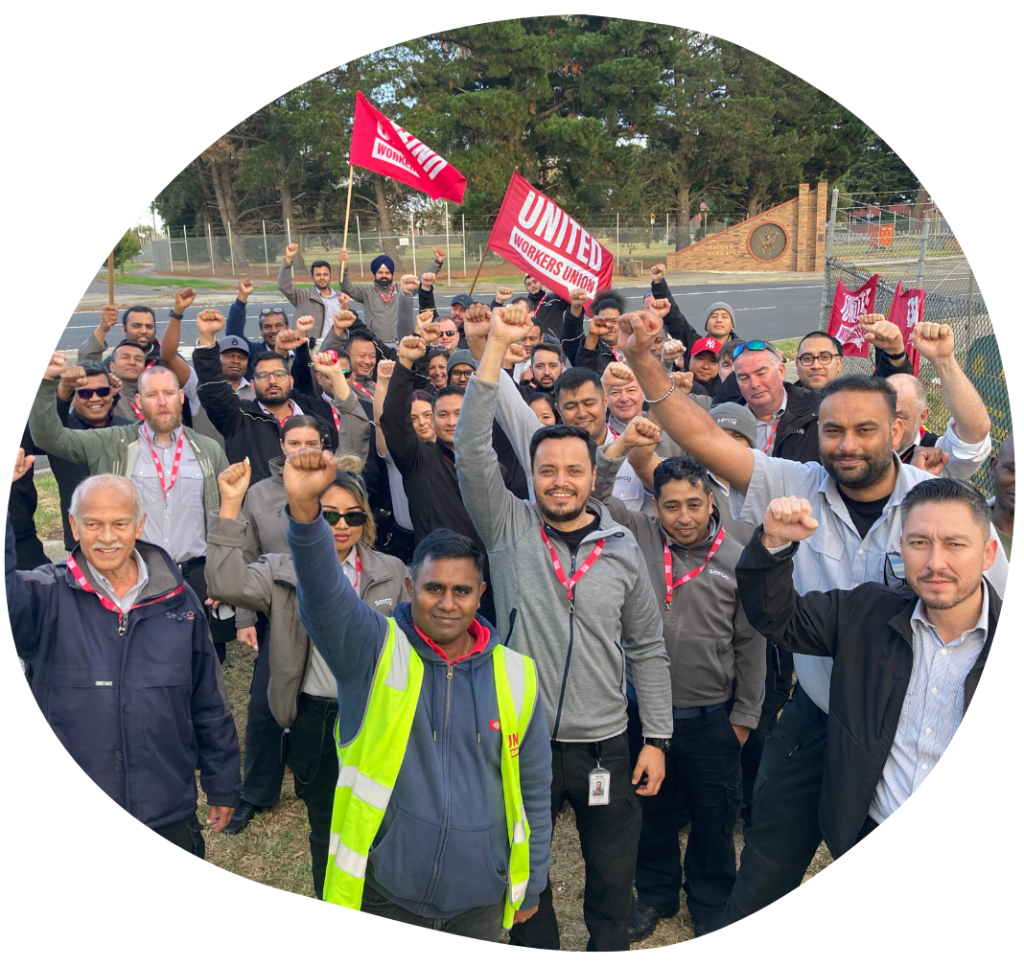
Godfrey Moase UWU allied industries director said, “It’s a huge mess and an avoidable one at that. This wouldn’t be happening if a massive multi-national like Serco, whose motivation is profit at any cost, lived up to its responsibilities to its workers, detainees and the community.”
SA Health workers join DHS in taking action for a fair deal
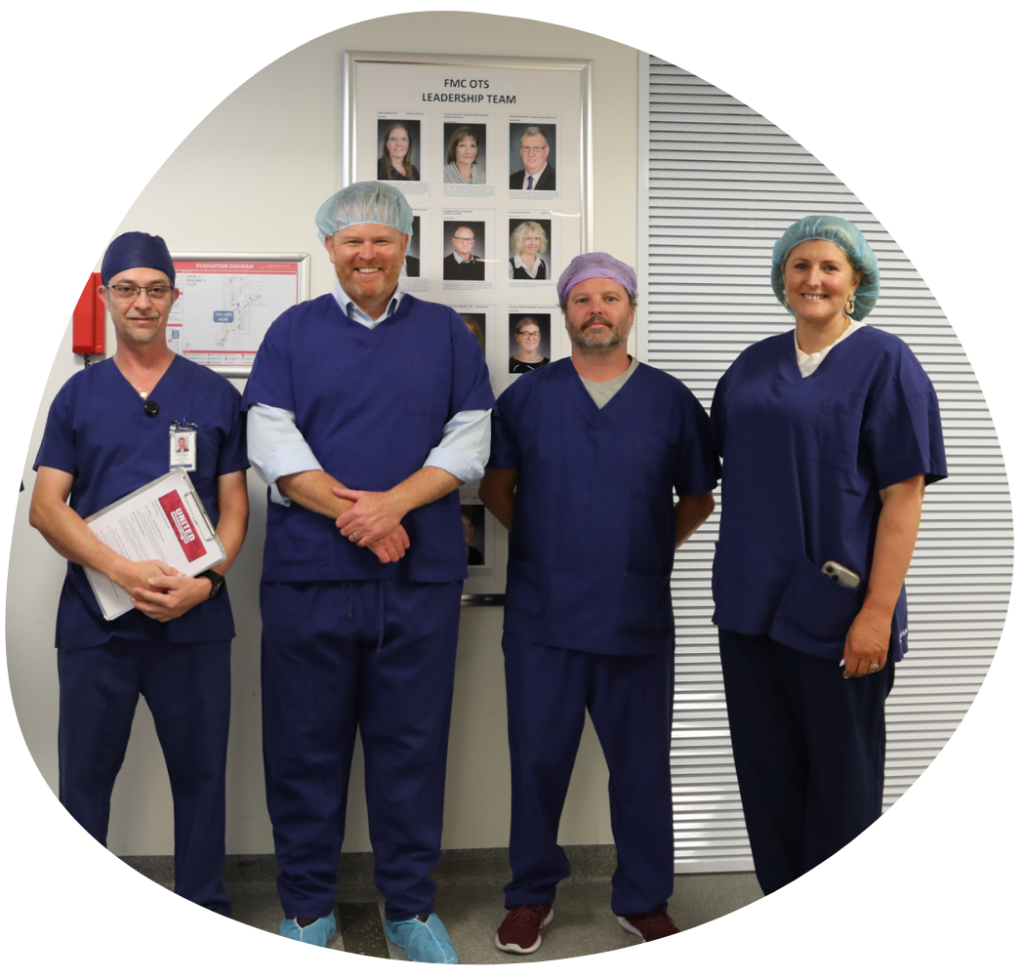
With bargaining underway for workers in the South Australian public sector, UWU members have been taking action for a fair deal.
DHS members led the way by taking industrial action, and on Saturday 22 February SA Health workers commenced action across SA hospitals and SA Health sites.
Across South Australia UWU members show up, ready to make a difference. Day and night, UWU members are there in our public disability, health, and education systems.
While the different work groups have a range of claims the common theme across all sectors is Same Job, Same Pay. Members are demanding same pay as their counterparts around the country paid under the Federal Award.
The government updated it’s offer as a result of DHS workers’ action. UWU bargaining representatives told the government that their new proposition is a step in the right direction, but it does not meet key claims for, and ongoing commitment to, same job, same pay beyond the life of the agreement for all workers, and a fair deal.