
Wage theft laws
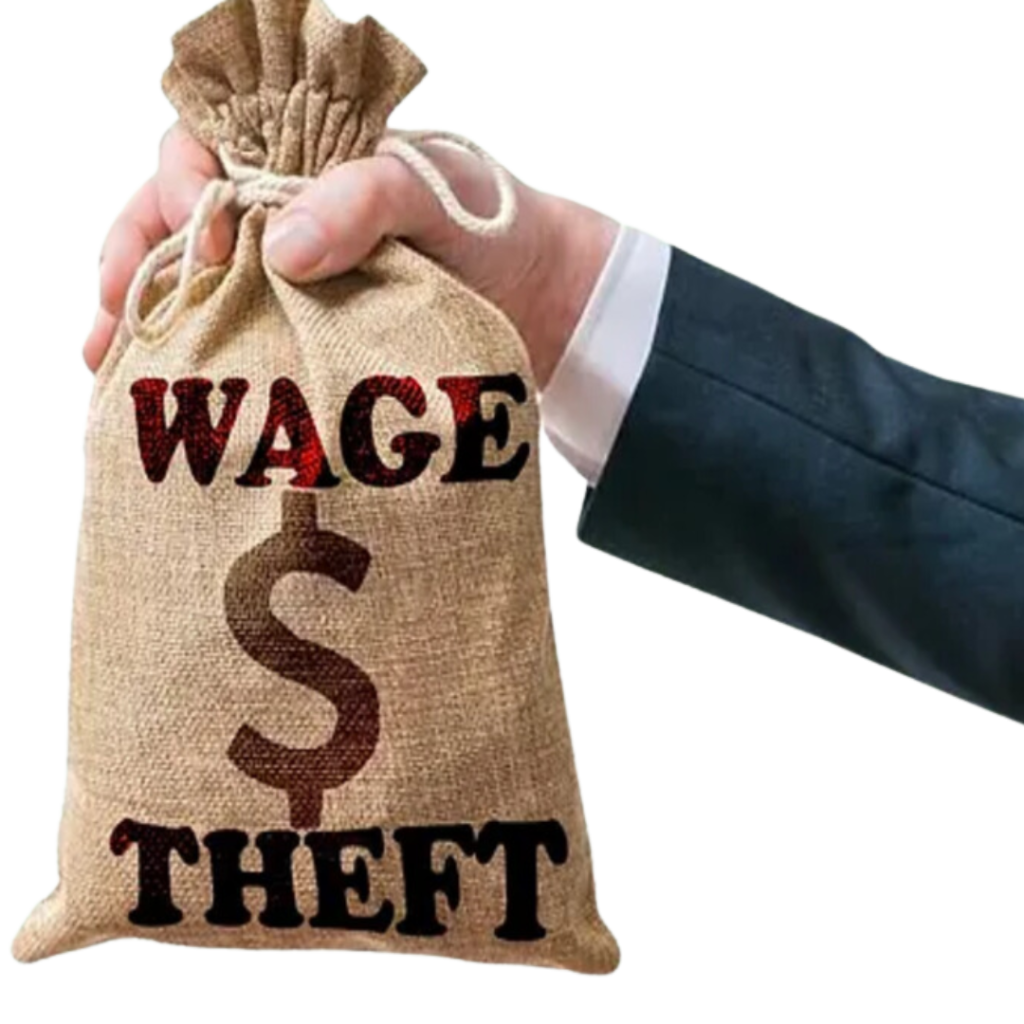
Wage theft (finally) became a criminal offence across Australia as of 1 January 2025. Want to send a boss to jail, or just make sure you’re getting paid properly? Here’s some info that could come in handy for you!
What is wage theft?
Under the new laws, wage theft is the intentional underpayment of workers. This means that if your employer makes a mistake with your pay, and pays you back quickly, they are not at risk of being charged. But if your boss pays you below the correct rate on purpose or has made a mistake that they then refuse to fix, they could be in big trouble.
Importantly, wage theft doesn’t only relate to your hourly rate of pay, it also includes:
- Compulsory superannuation payments
- Leave and leave loading
- Penalty rates and overtime
- Other loadings and allowances
- Classification for your role under your Award or agreement
What to do if you have been underpaid
Despite these new laws, underpayments and wage theft will still happen, though hopefully not as often! If you’ve been underpaid, the first thing you should do is ask your employer to fix the problem and back pay you for any missing wages or entitlements.
If they refuse to recognise the issue, or fail to pay you back contact our Member Rights Team for advice on next steps. While we expect these laws to be helpful, court cases and investigations can take a long time, and our goal is always to ensure you get your stolen wages as quickly as possible. Trying to get your employer busted under wage theft laws might be tempting, but it could take a long time.
How did this happen?
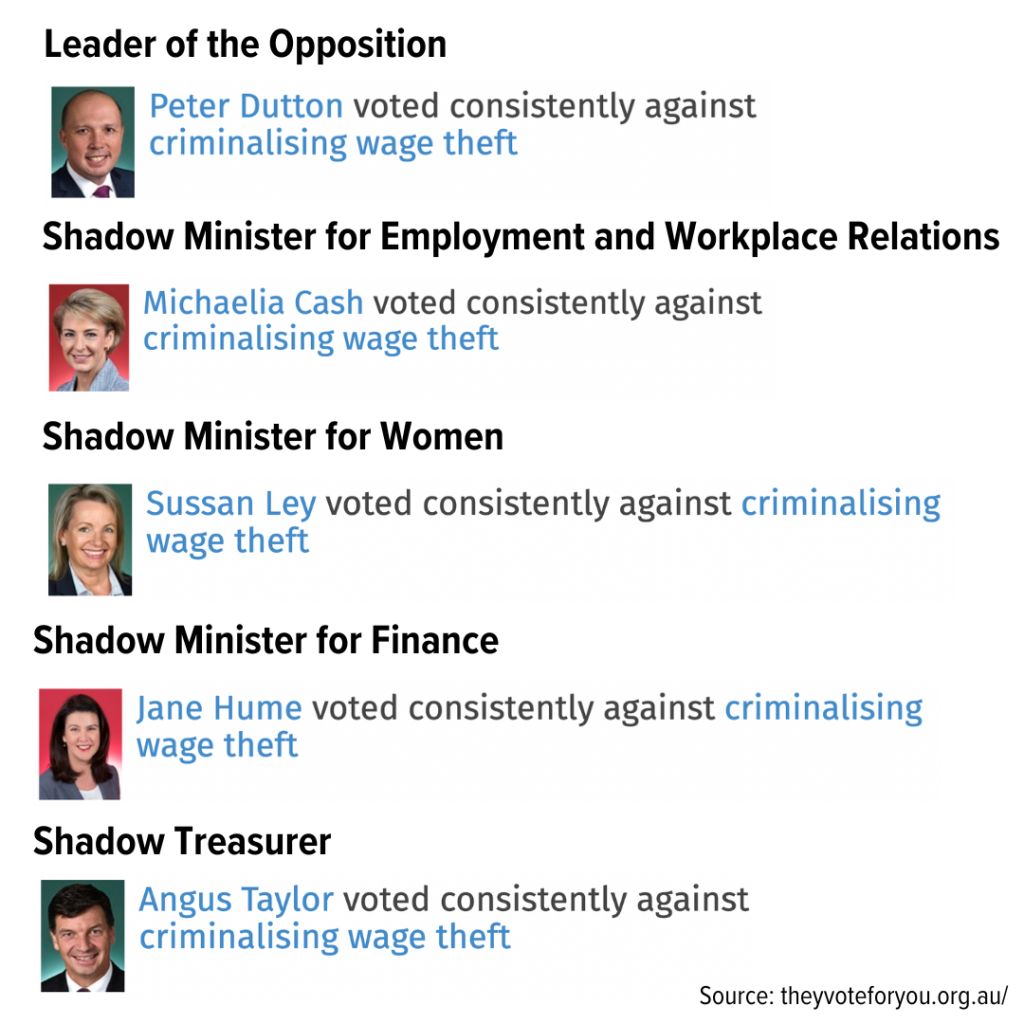
Labor has a track record of backing workers. Not only have they made wage theft a criminal offence, but they have also criminalised industrial manslaughter, making workplaces safer. Are you wondering about the Coalition’s track record on wage theft laws? Well, it’s safe to say workers aren’t their first priority!
Ultimately these laws came about due to the tireless activism of union members in a broad range of industries all around the country. Congratulations to all members who spoke out, signed and shared petitions, attended rallies and took action at work, online and in the streets to highlight the impact of wage theft on workers. It’s thanks to you that these legal protections are now in place.
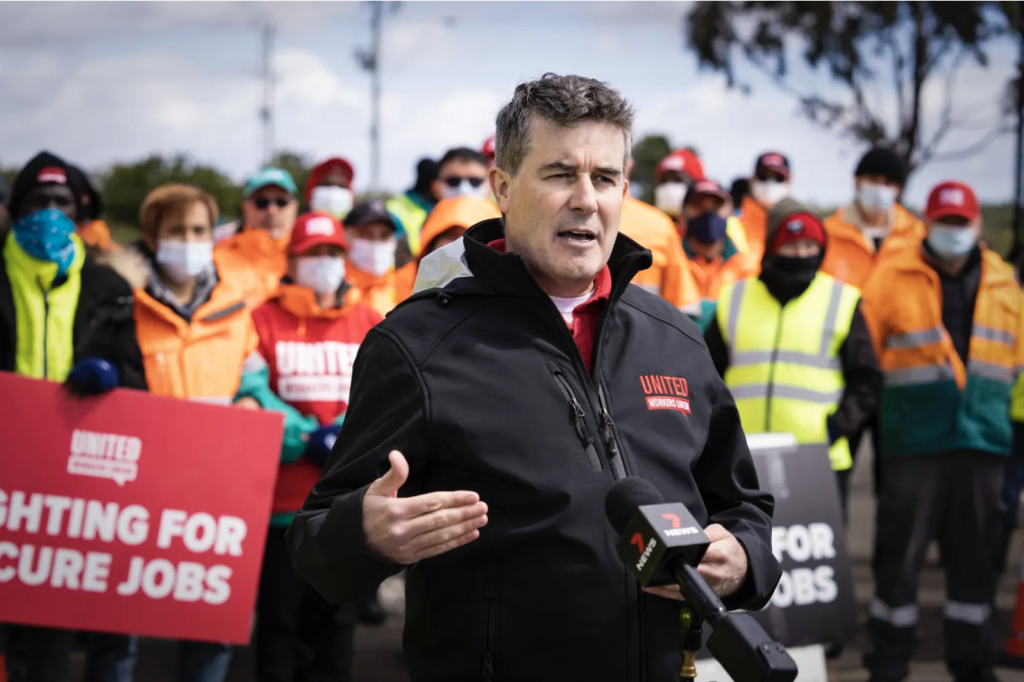
UWU Community: Tim Kennedy, UwU National Secretary
We’d like to learn more about you as a person and your background Tim, so can you tell us how you got started in the union movement?
I was born in Wangaratta, in North East Victoria and grew up in a small town called Corryong up in the mountains. I travelled all around regional Victoria a lot as a kid because both my parents were teachers. Both my parents had come off the farm when it was a really tough way to live. They broke through and became teachers, they were both strong union members in their teaching career.
When I finished high school, I moved to Melbourne to attend Monash University down in Clayton. I met a lot of people there who had shared values, and I also met a lot of people through my work. I worked in manual work in factories and the like to fund my studies.
I was a bit of a perennial student. One of the reasons was that there was this thing called “the recession we had to have,” and it absolutely smashed the economy and I was a young person at the time. Everyone was out of work and that experience was quite scarring in a sense – the problems for young people and the exploitation they experienced. I was lucky enough, after I’d finished my Masters degree, to be offered an opportunity to study law. And I just did it. I pursued my interest in labour law issues, and then I was picked up by a union to be their industrial lawyer.

I did that for a period of time, but then I really wanted to get involved in the work of organising, and so I began my lifelong journey with the Union.
Throughout your career you’ve been involved in so many campaigns and actions, is there one that really sticks out to you that you’re especially proud of being part of?
I feel very lucky that I’ve been able to be in a union with so many good people and we’ve won a lot of big campaigns. We’ve won a lot of disputes and changed people’s lives, and we’ve done that because there’s been a lot of us working together around it. They’re all very important because they have a big impact on people’s lives.
One I keep coming back to because it was a was a moment in time for my old union to decide that it was not going to turn its back on workers but was going to stand with them. It is known as the Baiada poultry dispute.
We had a situation at Baiada where the company were employing people, many, who had just recently come to the country, on $10 an hour, $8 an hour, cash in hand – just breaking all the laws. Our organisers patiently organised those workers for a year and built up their hope, but I think the thing that really broke it was, we represented the production workers, but there was a cleaner there who was treated appallingly. And one night he was swept up by the machine and decapitated and there was no one there for him. I just became the leader of our Victorian branch. And I said we need to be the Union for everyone.
We went on strike at that company, there was a state Liberal government that put the full force of the police onto that picket line to break those workers who were really struggling, people who were trying to build a life in Australia and they were decent, genuine people. They held that picket line with riot police trying to bust through them and we held that strike for two weeks and we completely changed that company. We won that.
We didn’t turn our back on workers who wanted to take action. And, as a union, said that if something terrible like that happens, we must stand up and be a union of action. That was an important strike, it started to change the poultry industry, but it also changed the union, and, in many ways, it set my old union on a path to where we are now – the United Workers Union. We put workers’ issues first, our theory of power says, you go to where workers want to be, you stand with them, and you can change their lives. It was a seminal dispute.
We talk about how members are the union, and of course they are, so how can members have real input and drive the decisions that are made by the union’s leadership?
Yeah, that’s a really important question and I think it’s very easy to say we’re a member led union. And I think too often it’s said and people pass over it. But the reality is, it’s fundamental.
Unions work when there’s trust, and when workers believe that it’s built around the issues that are important to them.
It starts with activity at the workplace. We have to be a union that is present and alive in the workplace.
We have to have workplace leaders, and we need to support them. When you take action in your workplace, members get a tangible experience of what collectivism can do and that demonstrates what’s important.
Our theory of power is organising around the issues that are important to workers and, taking action around those issues. If you can set that example in the workplace, it sets the priorities for the union – workplace by workplace, by workplace. It shows the union as a real, tangible lived experience, not only for the workers in that struggle, but also for the people who work for the union full time.
Another key question I ask is, “are we building power?” When I’m asked “should we do X,Y and Z?,” my answer is always, “Does it build the power of workers?” If we can say yes, then we do it. If we can’t say yes, then we’ve got to question it.
When we build workplace leaders and delegates, then we can take them from the workplace, connect those delegates across a company or a sector, or an industry or a government department, and then those people get to step up and start to lead in a broader sense and get into the industrial sector, and into the economic and political debate.
Ultimately, the fullest expression of workers leading in their union is to participate in Union elections to actually have a say about what type of union they want, what type of leadership they want.
So ultimately, it looks like workers being able to lead in their union in the workplace, then making certain that they have the opportunities to broaden out from that inner circle to industry, to the sociopolitical contest of the day, to then having a say about what our union should look like through union elections.
What does a normal workday look like for you… if you have one?
Haha, I’ve always wanted a normal workday! The reality is unions are about working collectively with people, so there is no normal workday for me.
My day could start by talking with you, for example, about what is the union. Thinking about the purpose of the union, if we’re succeeding and what that looks like. Or, I could be at a work site talking to a group of workers about their bargaining that’s coming up. I could be talking about some of the laws that we need to deal with. I could be involved in talking to some of the other unions.
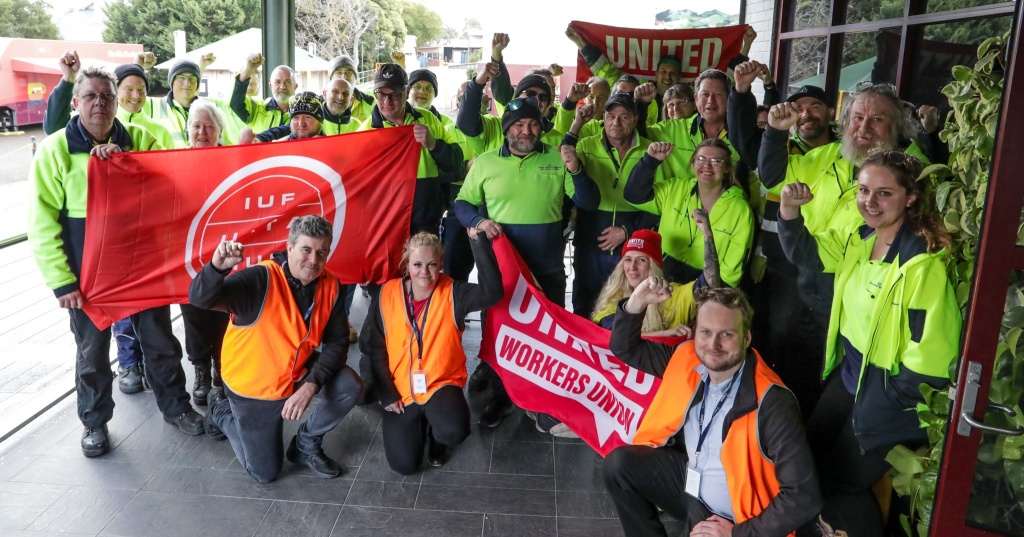
We are making certain that the United Workers Union view is heard now that we have a federal Labor government. I’m asked more to give input to the government about what issues we need to be thinking about.
And then there’s a whole lot of mundane stuff to be quite honest. You know, how do we make certain that we’re resourcing everyone in the Union to be able to work to the best of their abilities. And that’s difficult work because we have scarce resources and we need to deploy them as best we can and we have a lot of things we want to do!
Then there’s a whole lot of regulatory stuff making certain that the Union is administered in a way that the members can have confidence that everything that we do is in the interest of working people.
So, one of the good things about my job is, yeah, there is no one set pattern for the day. And the other thing is that I get the opportunity to move around Australia and speak to different workers.
We’re also a union that has an international outlook and we play our role internationally, not only supporting workers in our regions but also making certain that we support the idea of global solidarity because a lot of our employers are transnational corporations, so I play a role in that as well. It’s pretty varied.
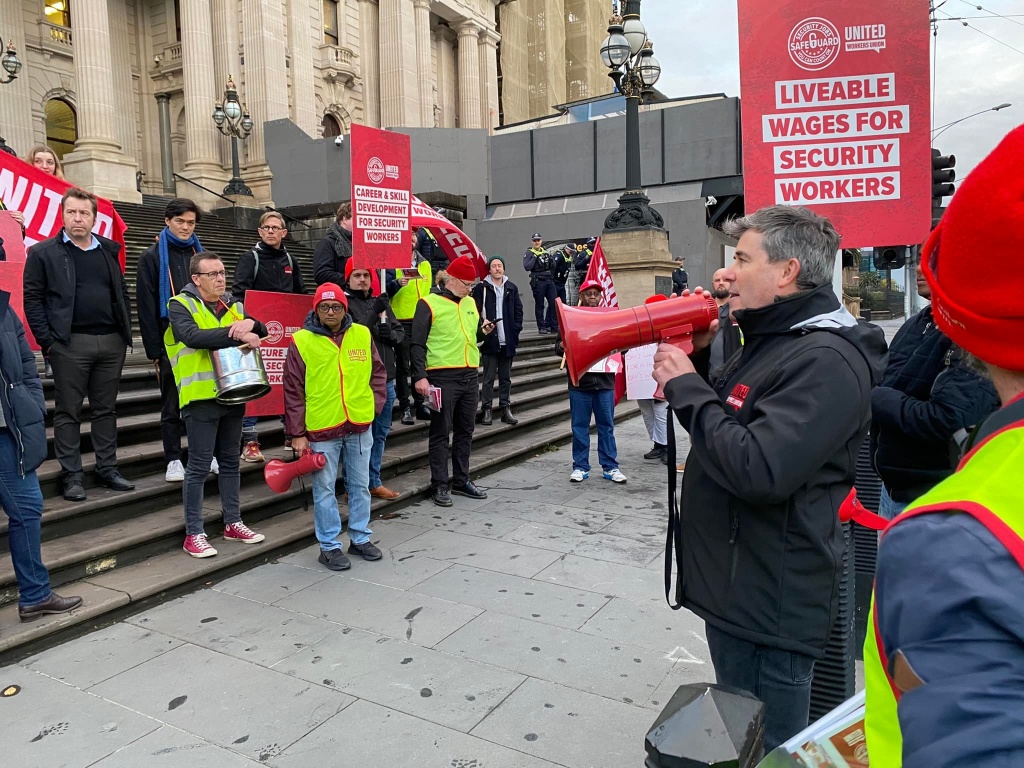
I think one of the big challenges with my job is that I’m in a contact sport, it’s a contest and you need to kind of be aware of that because when you go talk to a major company, they’re not always pleased to see you. Generally, I’m there because there’s an issue.
I think an ordinary day is trying to be in the contest and do the right thing by workers.
What do you what are your favourite days involve?
My favourite days are when I get to go around to sites and have meetings with members. This week I’ll be travelling to Western Sydney to see some workers at big Woolworths warehouses. It’s difficult times there, but there I have a great time there because I actually get to understand what is important to workers right now.
Time for some easy questions! What is your favourite comfort food?
I’m a big fan of Italian so I have to say there’s two, spaghetti Bolognese and spaghetti Puttanesca are my comfort foods. I can’t go wrong there!
What song do you put on to get amped up in the morning or on the way to an action?
That’s quite hard! It changes from time to time actually.
Liz Stringer, an Australian singer-songwriter, she had a great album, with a great song on it called Dangerous and I like listening to that. I have a big streak of Irishness in me. There is a song that I like listening to by Sinead O’Connor and The Dubliners called The Foggy Dew – I listen to that and I’m ready to face most strugg;es.
We know you’re very busy, you pack a lot into a week. How do you relax?
Yeah, I don’t. The way I relax is I exercise to be honest. I swim quite a bit and I also ride my bike. Exercise is good for my head and it is important to be fit to do this job.
I had an amazing experience swimming last January. I was out in the Bay. I think it would have been 7:00 in the morning. The sun had come up and I was swimming along and I saw this big grey barrel shoot underneath me. In Port Phillip Bay the water is very clear at that time of year, it’s beautiful. Ten seconds later, an explosion out of water and a pod of dolphins, six or seven, just exploded out of the water about 50 metres away from me. My first thought was sharks, I thought I was dead! But when I realised it was dolphins, it was fantastic. Not that relaxing!
Looking to the future, what are your predictions for 2025 or what do you foresee as some of the big things we’ll be working on as a union?
I’m loath to make predictions these days as the world is increasingly complicated and volatile, but I do know what the big challenges are ahead for the Union because they’ve been with us for some time.
The issue is that economic inequality in this country continues to widen, especially for the younger generation, and I think the Union has an important role to play around the economic inequality piece in Australia and being a strong voice for young people.
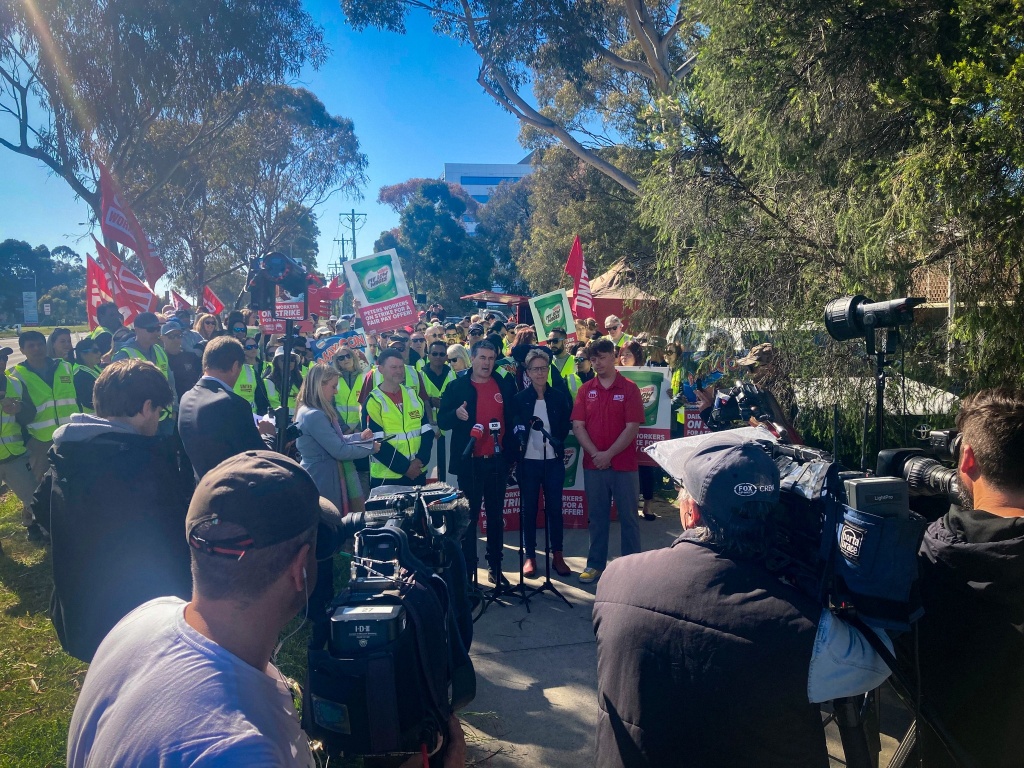
We need to continue to collectively bargain as hard as we can and to do that we need to have more people in the Union to make certain that everyone’s contributing to that because wages in this country are not keeping up with the cost of living, and if the union is worth anything, it has to deliver on that front.
There’s work to be done, not just around economics but around Australia’s cohesiveness – there’s important work to be done on reconciliation with First Nations people, we need reconciliation. We need that voice. We need truth and we need treaty.
The other big thing for the next generation is that we’ve got a role to play, to make certain that we have a sustainable climate. We must ensure there is economic social justice in how we respond to changing our energy mix to make the climate safer, to make certain that people aren’t left behind.
We want to be a Union for the many and not the few. And I think those big three themes. Economic inequality. Reconciliation and justice with First Nations people as a country and how we address climate that takes everyone with it. They’re the things our union needs to be thinking about.
The nature of the union is we’re in the struggle game, because the rich and powerful will not give us anything, we need to fight for it and that’s what we’re here to do.

Let’s Set the Record Straight
With a few state elections coming up around the country, the liberals and right-wing media have been attacking Labor governments about public sector spending. A line that the national Coalition is backing up in the lead-up to the soon-to-be-called federal election. But we’re not all that surprised that people who can access private health and education say we spend too much on the public sector!
We know, of course, that investment in the public sector, and the workers who are part of it, is crucial for everyone. So how will you respond if you hear friends and family say we need to cut public sector spending?
Fair Pay for Everyday Heroes
Union members’ campaigns are paying off – we’ve been winning fair pay increases and catching up on wage growth. Not only does this help to keep people in the sector providing crucial services to the public but pay increases in the public sector set a benchmark and help to drive wage growth in other industries. When public sector workers win better pay, the effects flow on.
Public Sector = Public Good
Not being able to afford to pay for private health or education shouldn’t mean you can’t access decent hospital care and schools. The government’s job is to provide services. When we have a properly funded public sector, everyone can access good quality services, not just those who can afford to pay. Public sector wage growth isn’t a problem, it’s an investment in people. When we pay workers fairly and staff our services properly, we all benefit.
More Staff, Better Services
For the first time in years, we’re seeing head-counts rise. This means less stress for overworked staff and better support for everyone who depends on ambulances, schools, hospitals, and other essential services.
If wages start going backwards, and if positions are cut, workloads will become unmanageable, and we’ll see these everyday heroes leaving the sector in search of better pay and conditions. It will also mean that workers will have less time to do their jobs and will find it hard to continue providing the same high standard of support, care and assistance.
Union members have fought for and won great improvements to pay and conditions and we will continue to stand up for decent pay and conditions in the public sector, because we know a strong, well-funded public sector is important, not just for workers but for everyone!