
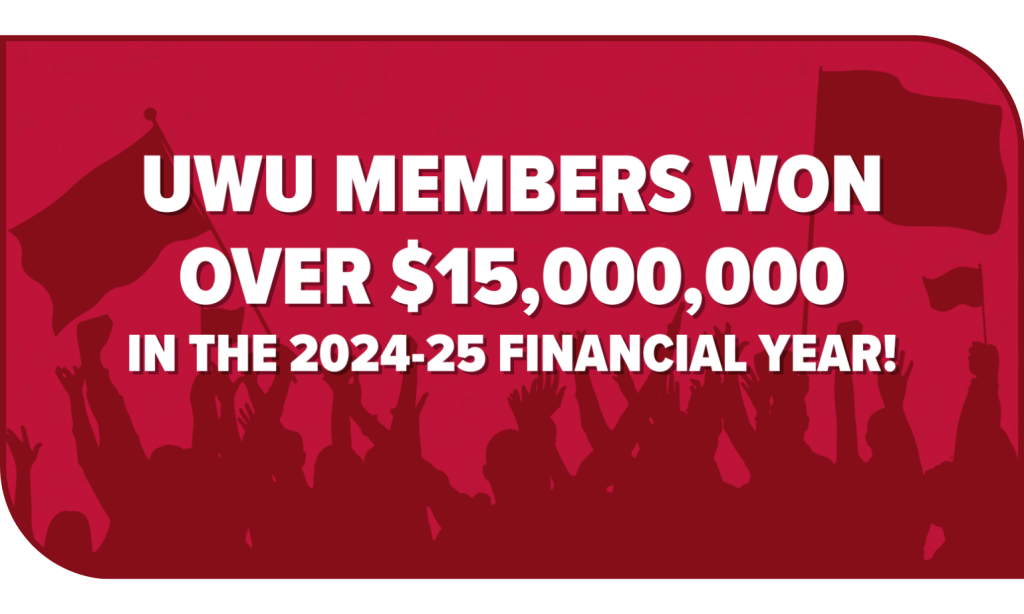
In the 2024-25 financial year, United Workers Union members won back over $15 million with the help of our union. What a huge effort!
Additionally, we stood with members in 2,911 disciplinary meetings and have ensured that 95% of members who had union support avoided termination of employment.
Our Member Rights Team provided advice and support to members in over 27,000 workplace issues and disputes, helping to ensure work is fairer and safer for union members. We equipped members with the tools and support to address pay and contract disputes and assisted members with a range of matters including bullying, health and safety issues, workers’ compensation and union rights.
In this period our union has also completed 347 agreements! The average wage increase works out to 4.18% per annum – higher than the recent increase to minimum and award wages.
This is just a brief snapshot of some of our union’s legal and advocacy work for the last financial year. But looking at these numbers it is clear that union membership is crucial to ensure workers are treated fairly at work.
Public sector action continues
As a national union, we have a clear picture of working conditions and pay in a range of industries around the country. And all too often we see workers in different states and territories getting paid differently for the same work. Pay disparity was a major issue during the recent PepsiCo bargaining campaign and resulted in workers taking protected industrial action to ensure they’re paid the same as workers doing the same jobs in other states.
Similarly, health and disability support workers in South Australia are paid at least 20% less than workers performing the same duties in other states. While the state grapples with a ramping crisis, UWU members are dealing with impossible workloads. SA Health workers took action earlier this week. UWU’s Public Sector Director Demi Pnevmatikos says,
“You can’t fix ramping without fixing staffing. You can’t fix staffing without respecting support services.”
“You can’t expect to attract and retain the workers you need to do the vital jobs in disability support, patient care and keeping the health and disability support systems running when you pay workers so poorly.”
This week’s action is part of the state-wide industrial campaign by United Workers Union members. Since February, more than 1,000 health support workers and over 1,100 Department of Human Services disability support workers have implemented work bans to demand fair pay and an end to chronic understaffing.
Watch the video below to hear more about the issues from Barb, a Patient Services Attendant at Flinders Medical Centre, and show your support by signing the petition here.
Nearly 20,000 essential public sector workers across Queensland are preparing to negotiate new wages and working conditions with their state government too. We’ll keep members up-to-date about this campaign and how you can get involved and show your support as it progresses.

Better super outcomes for First Nations peoples
A message from AustralianSuper
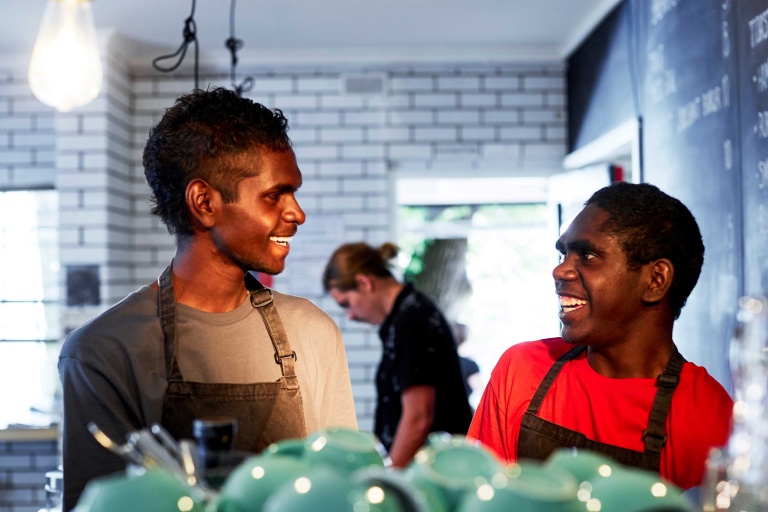
Super should be super for all Australians. However, AustralianSuper recognises barriers to super exist for many Aboriginal and Torres Strait Islander people. The superannuation system should be fair for all, independent of income, and everyone should be able to engage with it, regardless of cultural background and traditions. For Aboriginal and Torres Strait Islander peoples, this is not always the case.
Outreach program support
Some First Nations members may find it hard to engage with super due to distance, technology or cultural reasons. A number of industry super funds, including AustralianSuper, together with the First Nations Foundation conduct outreach to remote and regional communities. This is to directly help their members with super admin, answer questions and provide education about superannuation.
Super made easy videos
To explain super in simple terms, a series of helpful videos have been produced by AustralianSuper, together with the Indigenous Consumer Assistance Network (ICAN) and the First Nations Foundation.
Read more at: First Nations | AustralianSuper