
Unions have fought hard for women workers to be paid fairly and equally
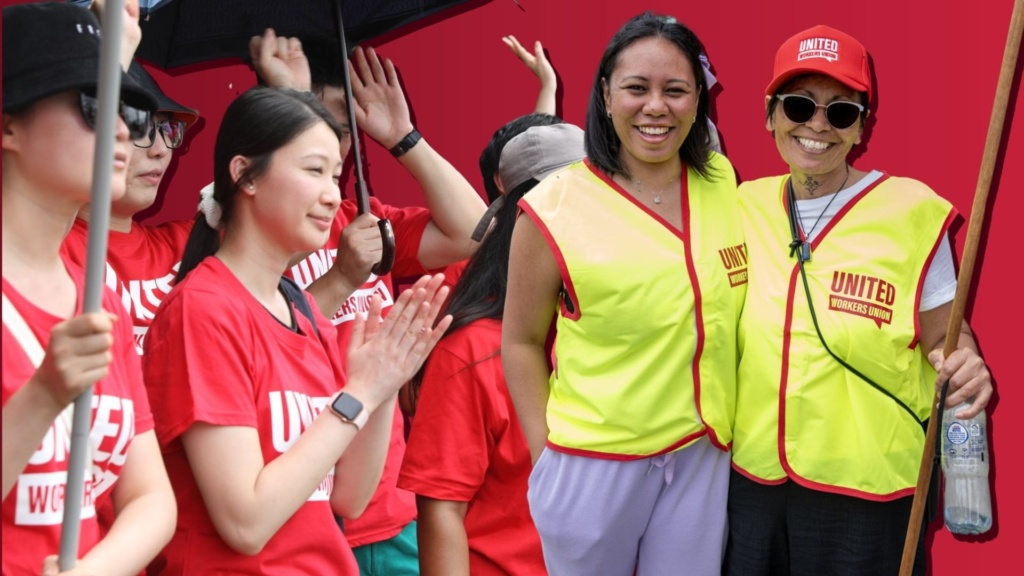
International Women’s Day in March each year is an opportunity to shine a light on gender inequality in the workplace. As United Workers Union members, we represent many industries dominated by women workers, such as early education, aged care, disability and health care, cleaning and laundry workers.
Because so many of these sectors are essential to our communities, it’s important to not only recognise their value, but also to treat these workers fairly. Historically entire industries have been undervalued due to a high number of women workers and the unfortunate reality that a lot of traditionally feminised work has been taken for granted and therefore underpaid.
But recent data from Australia’s Workplace Gender Equality Agency (WGEA) reveals that, since employers have been required to publicly report on gender diversity and pay gaps in their workforce, the gap between what men and women earn on average is slowly closing.
While this progress is encouraging, it doesn’t mean the job is finished.
What progress has been made?
In the past 2 years, WGEA has reported that women have gone from earning 78 cents for every dollar a man earns, to 79 cents to the dollar. This translates to a gap of roughly $242–$255 per week less in women’s earnings. It’s significant but slow progress.
To understand how to address the persistence of the gender pay gap, it’s important to look at how it’s actually measured.
Not just about equal pay
Union women worked hard to fight for equal pay for equal work, which was won a good 50 years ago. The recent Same Job Same Pay laws are also having an impact on equality within industries. But WGEA’s measures confirm, despite past gains and union wins, there are still barriers for women earning equal wages overall. And the consequences of this gap extend far beyond weekly pay packets.
The wage gap exists largely due to a range of factors. Women take career breaks to care for others and are more likely to work casually or part-time because they need flexibility. They’re being passed over for managerial roles that attract cash bonuses. Entire industries, such as health care and early education, are dominated by women and still attract lower wages. This also means that women retire with a third less superannuation than men and has contributed to older single women now having insecure housing.
So what can be done?
Collective action and campaigning by unions to properly value women’s work has made a difference.
UWU’s campaign for gender-based undervaluation review has increased women’s wages
UWU has been instrumental in campaigning for change to increase award wages for industries that are dominated by women. Our submissions elevated the voices of our members to bring the human story to undervalued and low-paid but essential work. As a result, Fair Work have introduced pay rate changes starting in 2026. Our members should be very proud of the influence we’ve had on this important work that translates to real and life-changing wage rises in industries that employ a majority of women workers.
If you’re employed under the Children’s Services Awards, try out the updated Pay and Conditions Tool on the Fair Work website to view the new pay rates.
These wins show what is possible when workers stand together — but closing the gap also requires change beyond the workplace.
We need more men to share the load at home
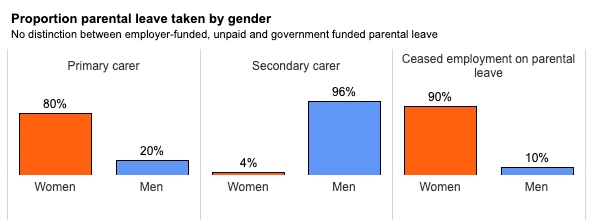
WGEA data suggests more men need to take advantage of flexible working arrangements.
In a vast majority of families, women are the primary care givers and take the biggest hit in work participation and earnings due to caring responsibilities at home. This unequal distribution of unpaid work has a direct impact on women’s career progression and earning capacity.
Women are not just overrepresented in lower-paid industries, they are also overrepresented in part-time and casual work. This largely due to needing flexibility to manage work and life responsibilities. A more equal division of labour in the home has a flow-on effect of increasing women’s participation and earnings in the workforce.
And as we have seen in recent years, transparency and access to data can also help drive change. When more workers are aware of gender inequality in their industries and get involved in changing workplaces for the better, change is possible.
How does your workplace or industry perform?
Data published on the WGEA site means you can now search your workplace or industry to find out how you compare. Overall, public sector employers have a narrower gender pay gap. This is in part due to workplace agreements that promote inclusive policies such as flexibility, paid parental leave, and prevention of discrimination and sexual harassment.
Armed with this information, workers are better placed to advocate for improvements.
What’s next?
While transparency, flexibility and wage increases are important steps, representation in leadership remains a key challenge.
Women remain underrepresented in senior management and CEO roles. These roles attract perks such as generous cash bonuses and fringe benefits that contribute to significant gaps in earnings. More diversity is needed to change workplaces. If you’re interested in becoming a leader in your workplace, consider becoming a delegate, a health and safety officer, or a union representative at your workplace to create change and contribute to closing the gender pay gap.
If you’re not already a union member, it’s time to join and make a difference.
Interested in more articles like this? Join our mail list and get up to speed on workplace issues and workers’ rights.