

Aged Care Migrant Worker Language Resource Hub
Is speaking your native language in the workplace not allowed?
Speaking their own language at work has been an ongoing issue for migrant workers in aged care, with several providers trying to prohibit staff from using languages other than English, even threatening termination. Have you experienced this at work?
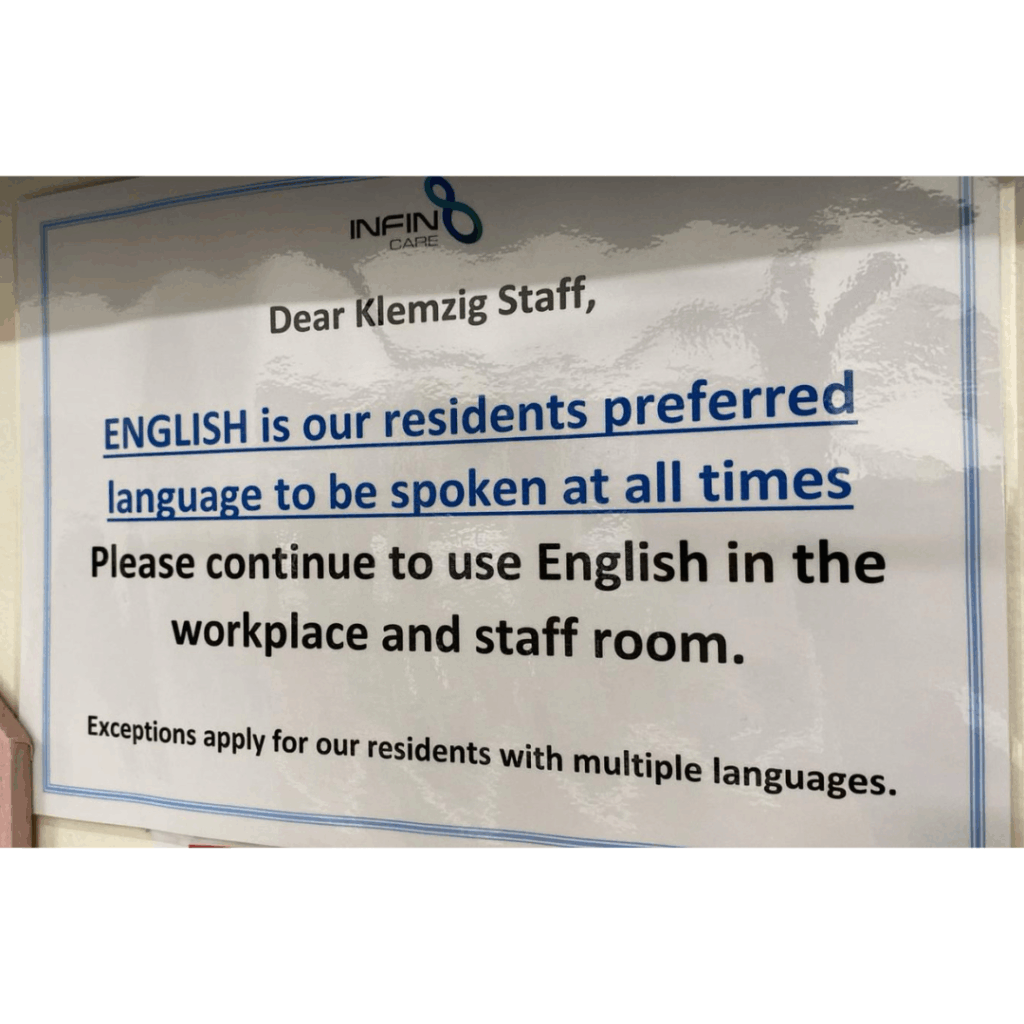
Examples of memos put out by aged care providers
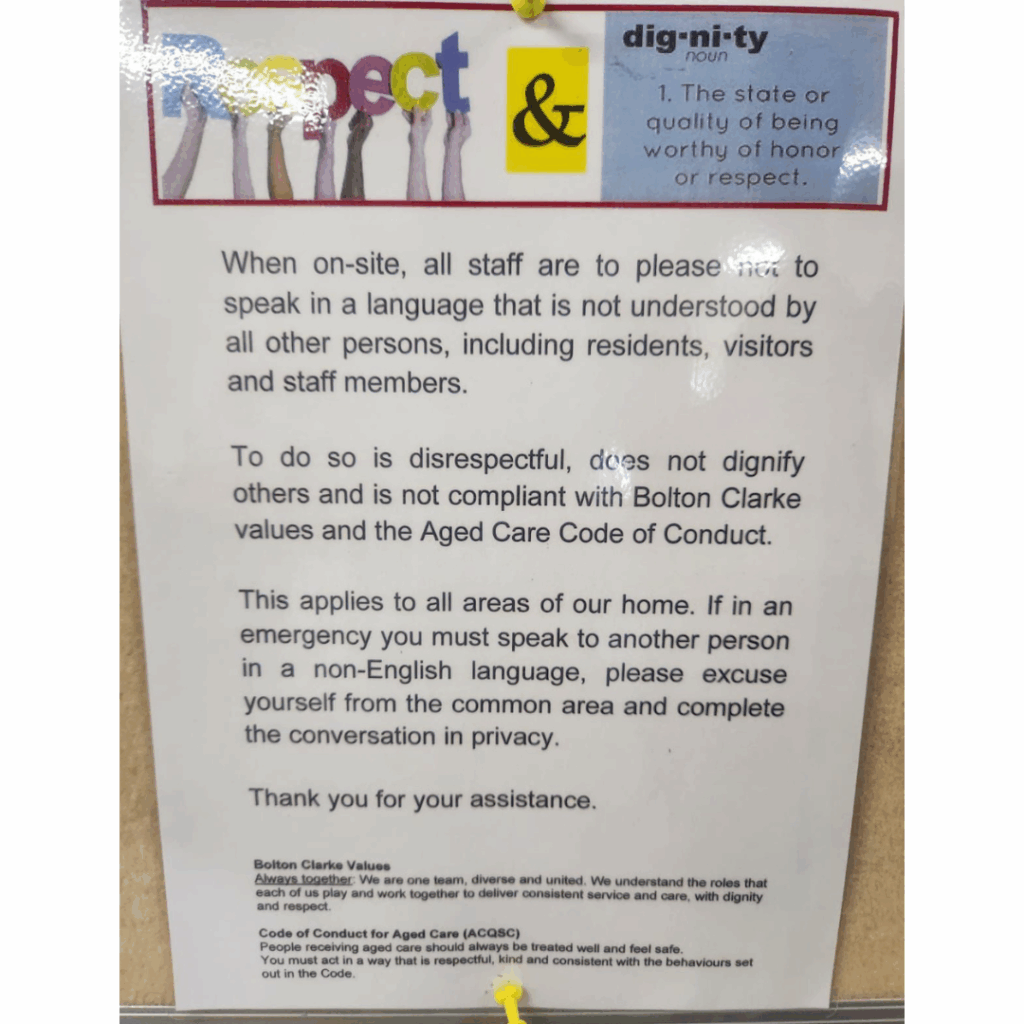
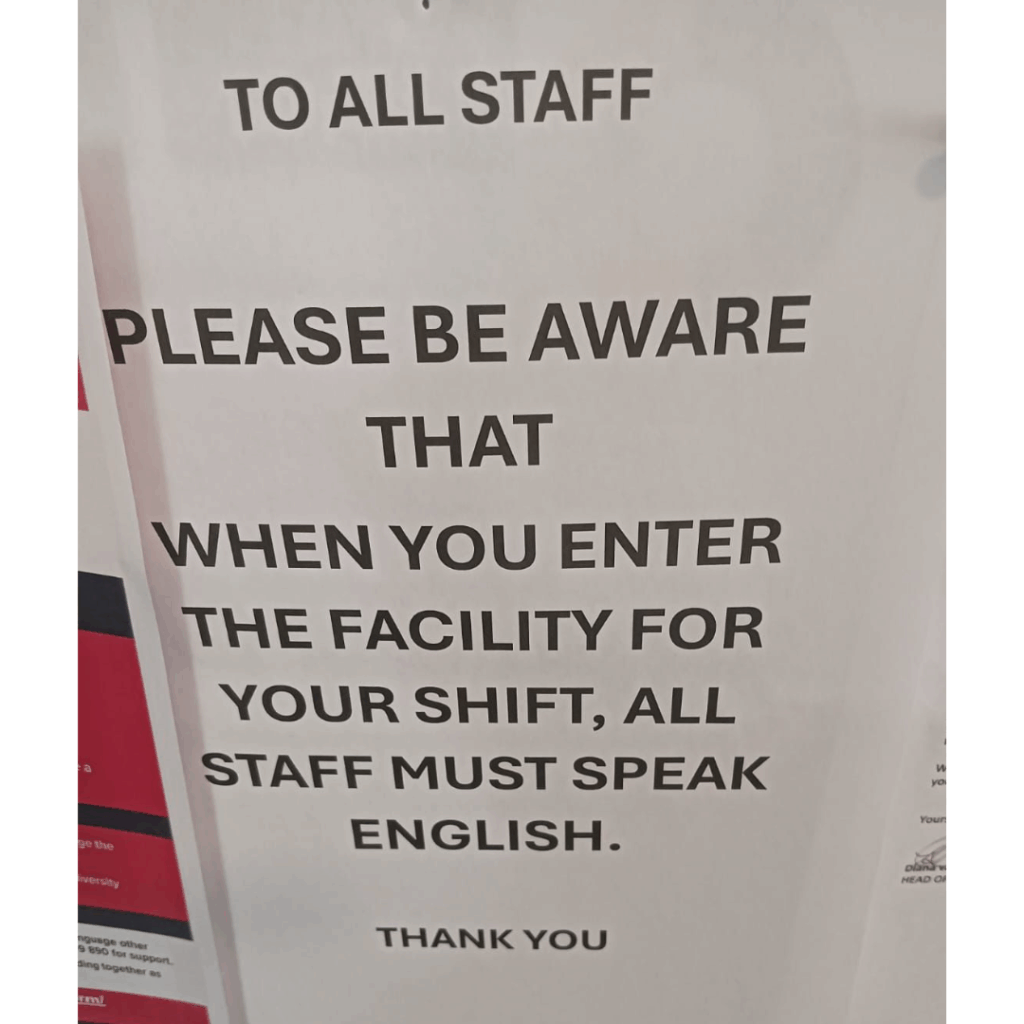
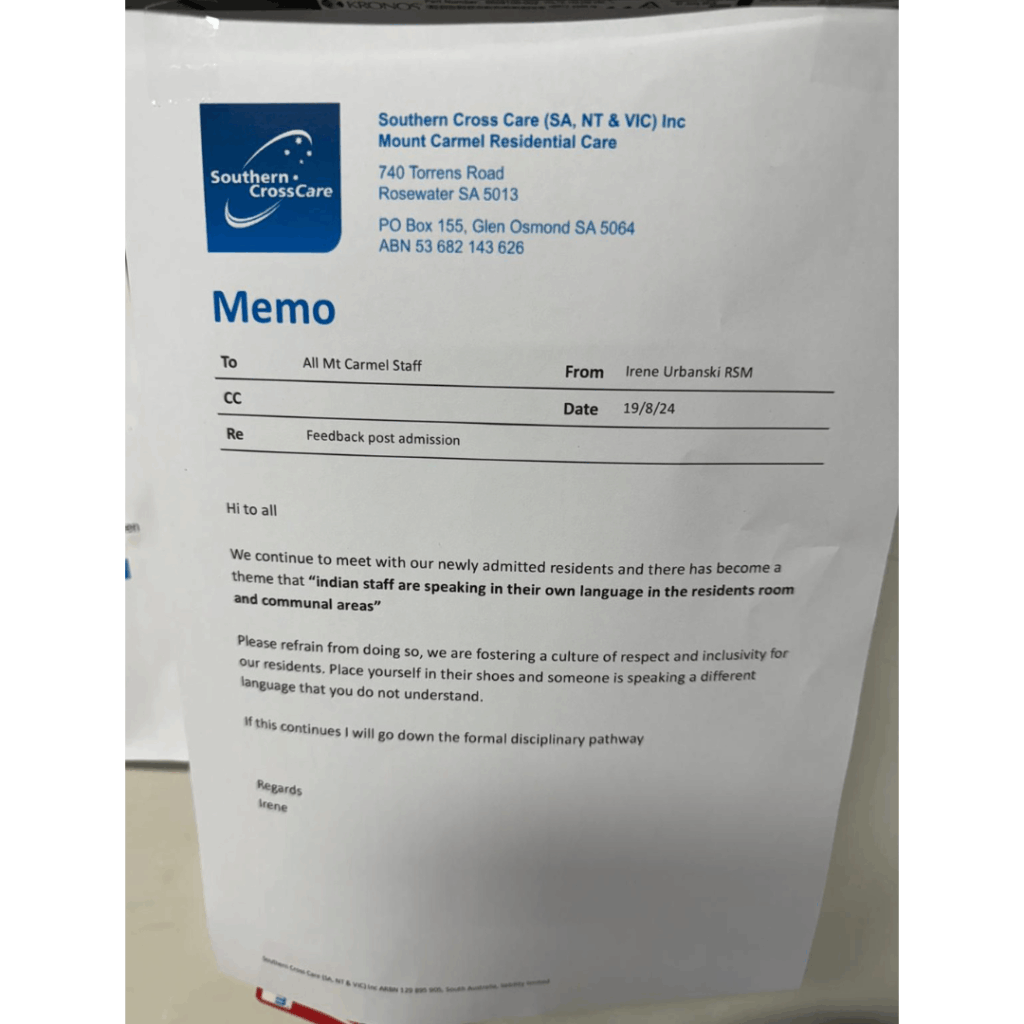
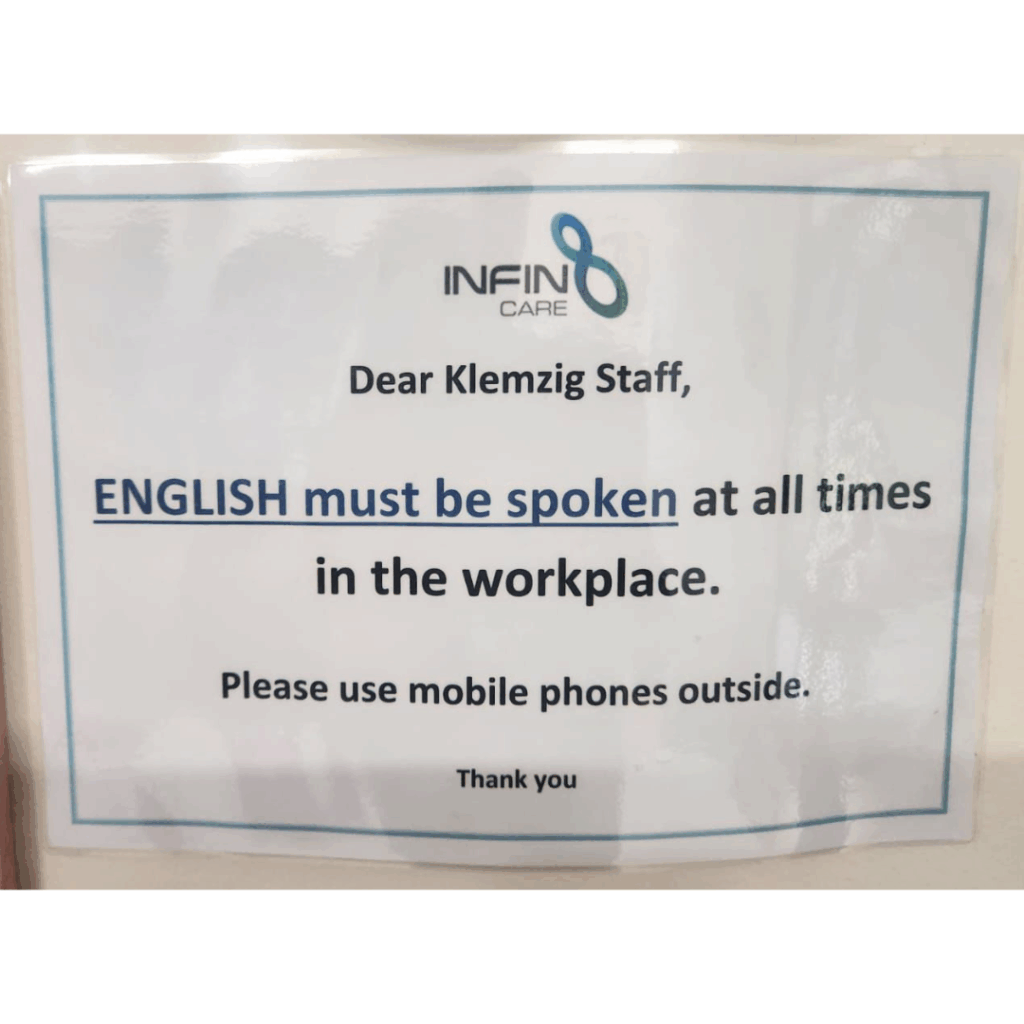

आफ्नो भाषा बोल्न नपाउने भनिनु केवल असभ्य वा अपमानजनक हुने भएकाले होइन, तर मानिसहरूले तपाईं तिनीहरूको बारेमा कुरा गर्दै हुनुहुन्छ भनेर सोच्छन् भनेर यो धेरै दुखद कुरा हो। मेरो परिवार, साथीहरू र बच्चाहरू केवल नेपाली बुझ्छन्, त्यसैले म मेरा प्रियजनसँग अन्यथा कसरी संवाद गर्ने?
Aged Care Worker and UWU Member Anglicare
Bilang isang migranteng manggagawa, nararamdaman mo na ang pagkakaiba, may hadlang sa wika at mahirap na palaging magsalita ng Ingles - kapag nagbabreak, malaya akong maging ako mismo, ang aking wika ay bahagi ng aking pagkakakilanlan. Mahalaga na makapagsalita ako nang malaya habang nagbabreak.
Aged Care Worker and UWU Member BUPA
अपनी भाषा बोलने के लिए निलंबन की धमकी देना बहुत डरावना होता है। कुछ अंग्रेजी शब्दों का हिंदी में कोई सीधा अनुवाद नहीं है, जिससे समझना मुश्किल हो जाता है। मेरे कई निवासी हैं जो हिंदी बोलते हैं। सभी भाषाओं को स्वीकार किया जाना चाहिए।
Aged Care Worker and UWU Member Helping Hand
Thật mệt mỏi khi phải nói tiếng Anh liên tục. Khi nghỉ giải lao, đó là thời gian của tôi để nói một cách tự nhiên và làm chính mình, không phải suy nghĩ quá nhiều về từ tiếng Anh đúng hay bị đánh giá về trình độ tiếng Anh của mình.
Aged Care Worker and UWU Member ResthavenCEO
Lavoro in una struttura di assistenza per anziani, principalmente italiani. Ho imparato l'italiano per comunicare meglio con i miei ospiti e le loro famiglie. Anche questo non è permesso quando migliora le cure per i residenti?
Aged Care Worker and UWU Member BeneCEO
Your right to speak your native language on your break is protected by workplace law
Language is part of who you are. It’s how you speak with your family, friends, and the people you care about. For many aged care workers from other countries, break times are the only chance to talk to loved ones or speak in your own language. You have the right to do that and no one should punish you for it.
In Australia, the law protects your right to speak your language at work. Your employer can ask you to use English when caring for residents or talking about residents for safety reasons. But your employer cannot stop you from speaking your language during breaks or in staff areas.
Threatening or punishing you for speaking your language is wrong and may be against the law. You are free to speak your language during breaks, as long as it doesn’t affect the quality of care.
Your Aged Care Union can help if this happens. United Workers Union supports aged care workers to make workplaces fair, safe, and respectful and to ensure every worker is valued for who they are and what they bring to care.
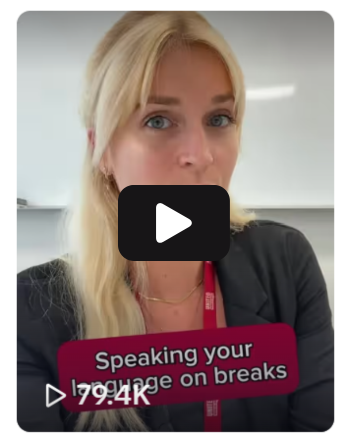
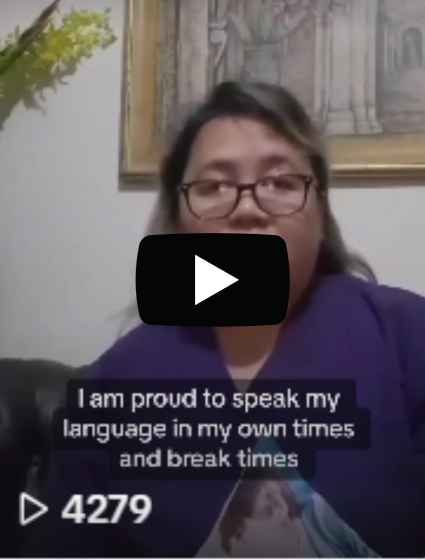
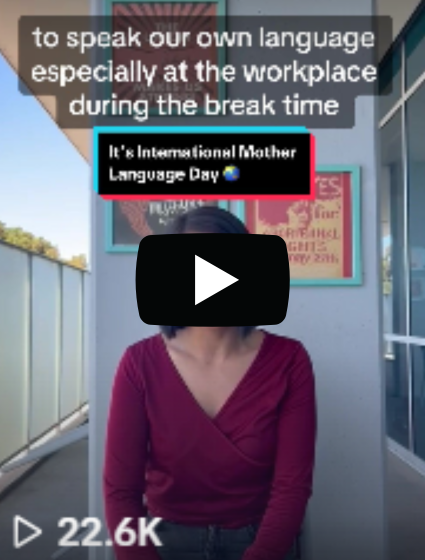
Find out more by watching our video series below!



Having issues in your workplace?
Your Aged Care Union can help!
Being a migrant worker can come with challenges. You may feel stressed, undervalued, or unsure of your rights. Your Aged Care Union is here to support you with resources to understand your rights, including a guide about speaking languages during breaks.
Your Aged Care Union has also taken action against employers to win fair treatment and positive changes for migrant workers.
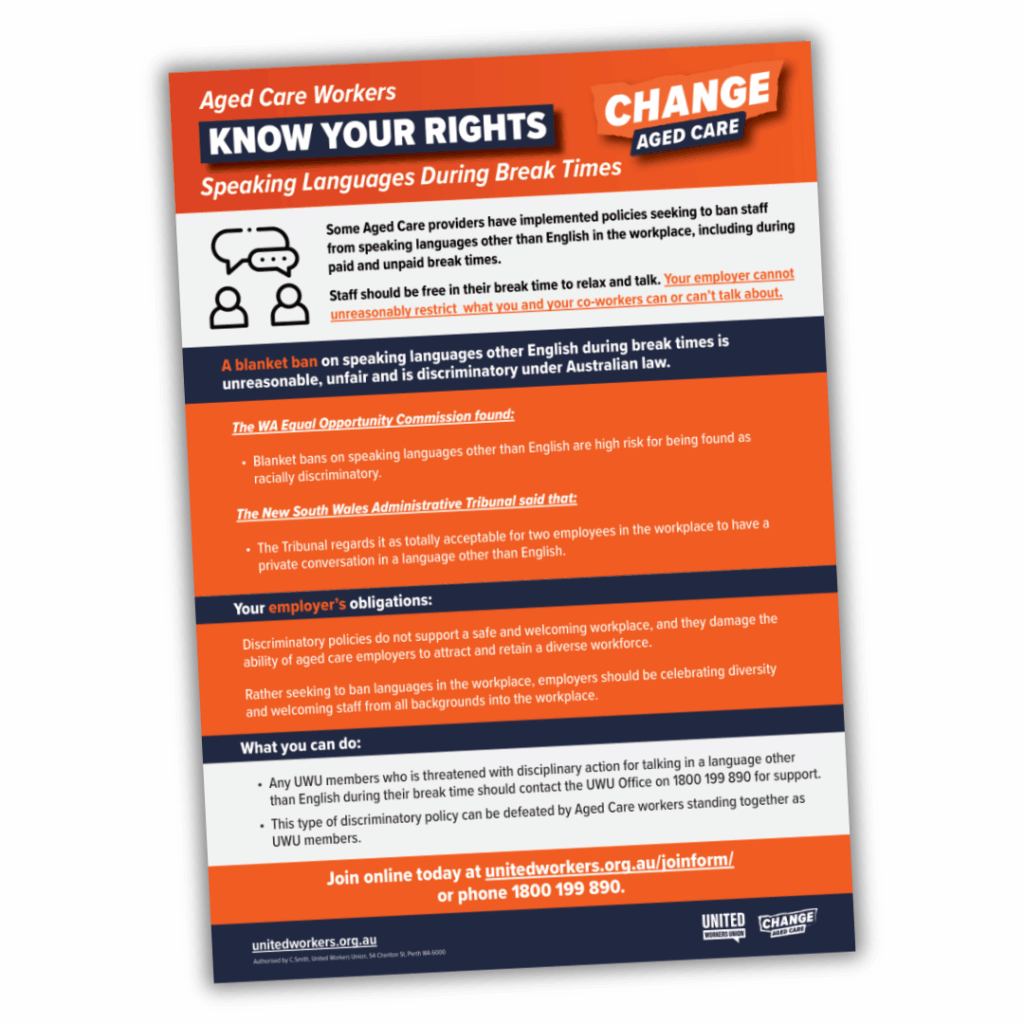
We win for migrant workers!
With the support of United Workers Union, our members have spoken up and won changes to unfair rules.
Bupa aged care
After a memo threatened termination for speaking any language other than English, members took action with their aged care union and escalated the issue to HR.
Bupa HR have now confirmed:
• English is to be spoken around residents for safety and quality of care
• Staff are free to speak any language during breaks and in staff areas
• Threats of termination over lawful language use were inappropriate and not company policy
This is an important outcome for migrant workers who deserve respect fair treatment and culturally safe workplaces.

helping hand
At Helping Hand in Port Pirie, members faced issues about speaking languages on breaks. An experienced aged care UWU delegate took action and called a meeting with HR.
8 UWU members attended and shared how upset, scared, and let down they felt, and how important cultural inclusion and safety is to them. After the meeting, Helping Hand confirmed staff can speak any language during breaks in staff areas, in line with workplace law.
This is a big step towards inclusive and culturally safe workplaces.

Remember: your employer cannot ban you from speaking your language on breaks. This is a right protected by workplace law! More than 40% of aged care workers are migrants, and your contribution must be recognised and respected.
Migrant aged care workers face extra challenges in the workplace that is why it is so important to join your aged care union. If you are not a member yet, join today!
fREQUENTLY ASKED QUESTIONS (FAQS)
No. Your employer can ask you to speak English when caring for residents, but it is your right to speak your language during breaks.
It’s important to speak English around residents and families for their safety, care, and comfort. Some residents may feel confused or worried if they do not understand what is being said. During your breaks or in staff areas, you are free to speak your own language.
No. Threats or punishment for this are wrong and illegal. Contact your Aged Care Union if this happens. Visit https://uwu.org.au/contact
Write down what happened and talk to your Aged Care Union delegate at your workplace or your local Aged Care Organiser. They will help you.
That is not okay. Racism and discrimination should never be accepted in the workplace. If this happens, write down what was said and when it happened. Contact your Aged Care Union for support, they can help you take action.
Be mindful of your surroundings. Try not to use speakerphone during breaks, use headphones when calling family, and keep your voice at a lower volume. Small actions like this help everyone feel comfortable and respected at work.
It depends on your facility’s communication policies. Speaking a resident’s preferred language can help them feel more comfortable and build trust, especially for people with dementia or limited English.
However, English should always be used for continuity of care and proper documentation. This ensures care notes, handovers, and instructions are clear to all staff.
Good practice includes:
Use English when others need to understand, for example during handovers or team discussions.
Ensure no one is excluded if they do not speak the language.
Follow your facility’s communication policy to stay compliant.
When done correctly, speaking in a shared language can improve care while keeping documentation and communication accurate.
OTHER resources
READY TO become a uwu member?
Join today and know you’ll be protected!